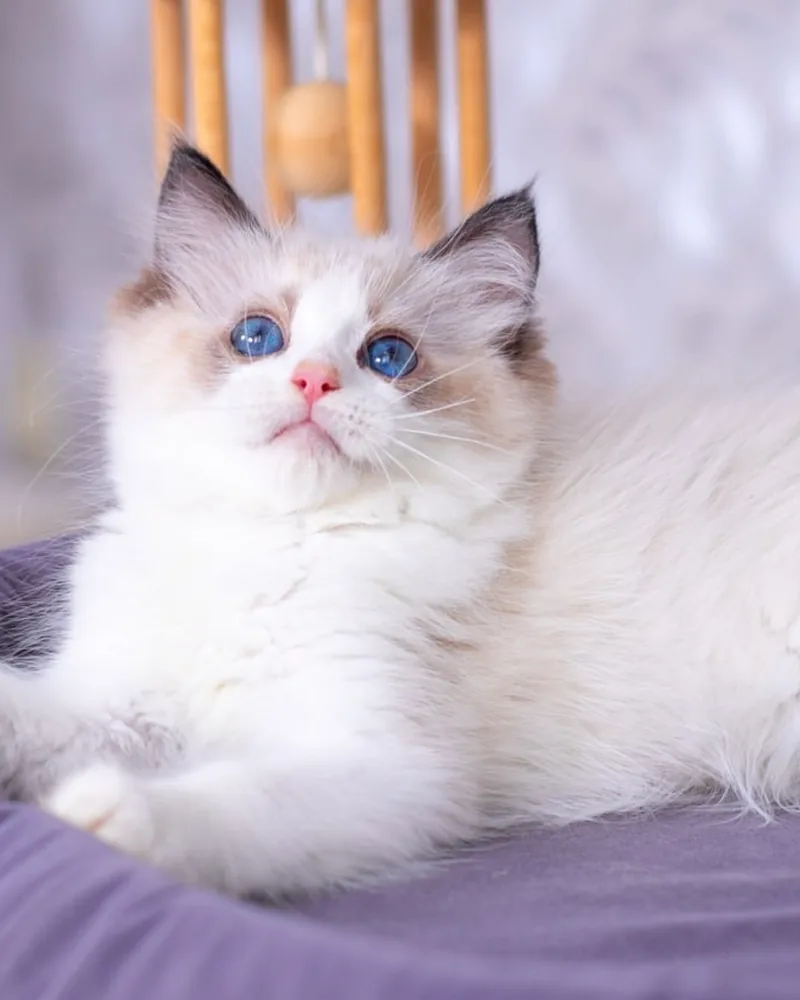
Juniper
Available- Sex
- Female
- Age
- 14 weeks
- Colour
- Seal bicolour
Long, plush and happiest stretched out on the cat bed.
Ragdoll colours
Ragdolls come in four traditional colours, seal, blue, chocolate and lilac, and three patterns, colourpoint, mitted and bicolour. Every one of the twelve combinations has blue eyes and a pale body with darker points on the ears, mask, legs and tail. A few other colours exist overseas, and a few colours you see advertised are not Ragdolls at all.
I'm Shannon from Regal Ragdoll Kittens in Bowral, NSW. We breed all four traditional colours in all three patterns. This page explains each Ragdoll colour, how to tell them apart in a kitten photo, and which "Ragdoll colours" to be wary of.
These are the kittens in our house right now, each labelled with its colour and pattern. Every kitten is $1,500, whatever its colour, and goes home at twelve to thirteen weeks desexed, microchipped and vaccinated. Tap a kitten's button to ask about them, and I will send more photos and a video.
Long, plush and happiest stretched out on the cat bed.
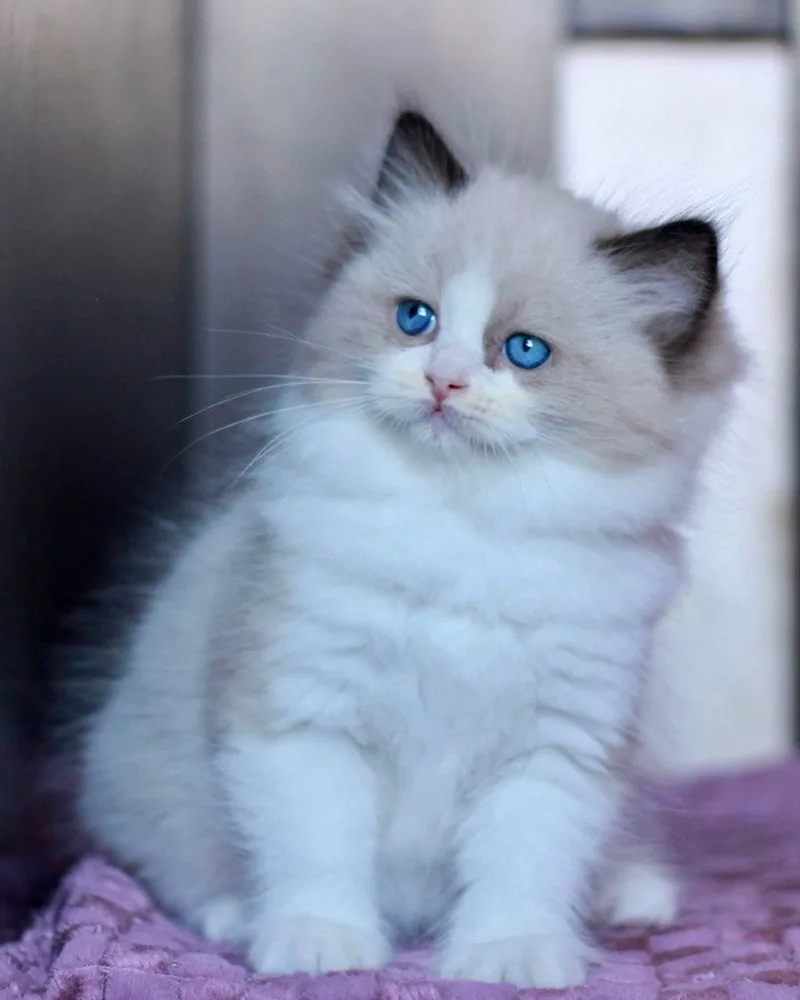
A round, soft boy who purrs as soon as you look at him.
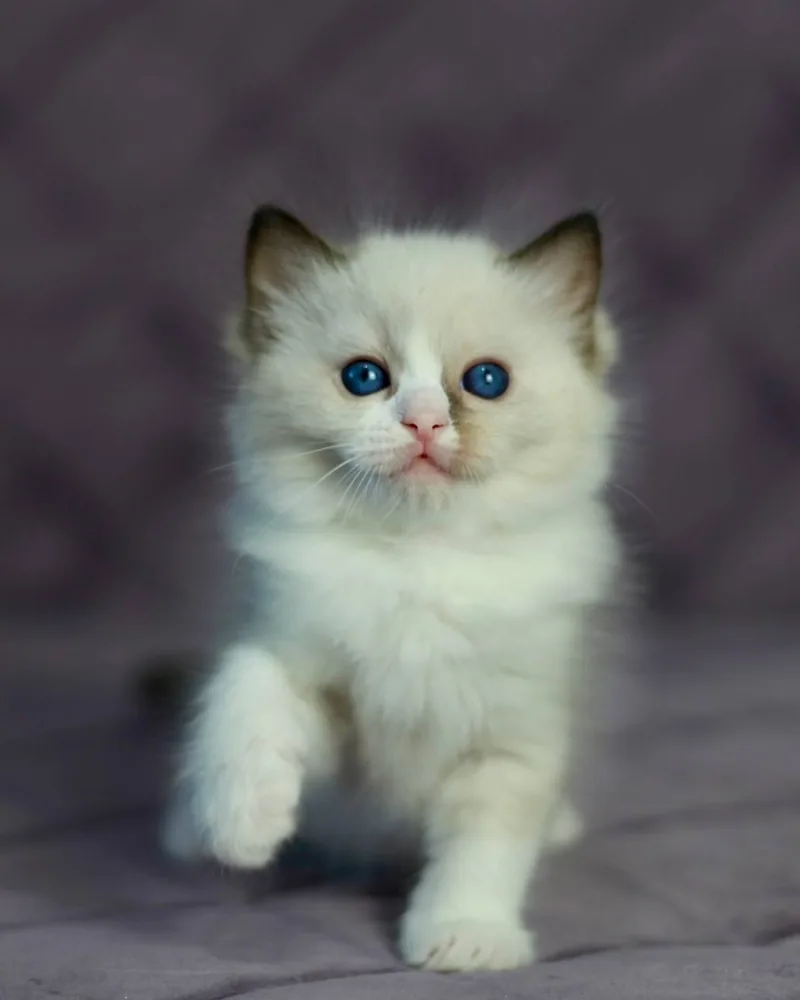
Six weeks old, wobbly on her feet and already marching up to meet visitors.

Calm, cuddly and happiest asleep on someone's shoulder.
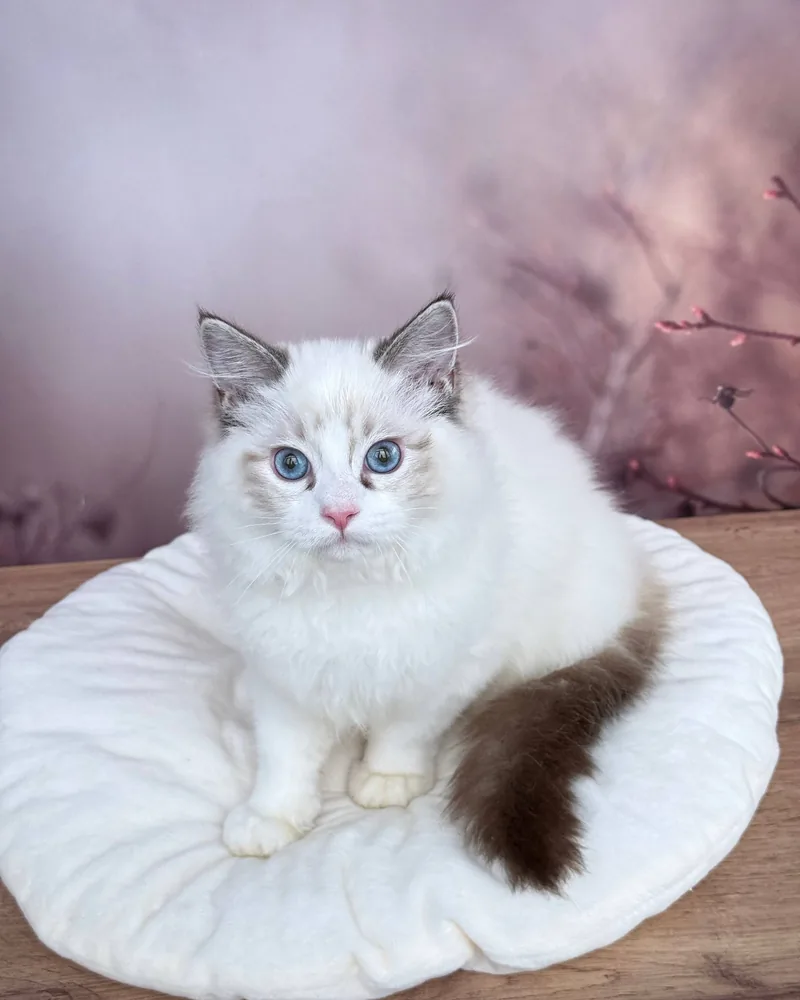
Playful, bold and fascinated by running water.

Sweet natured and devoted to her brother Ned.
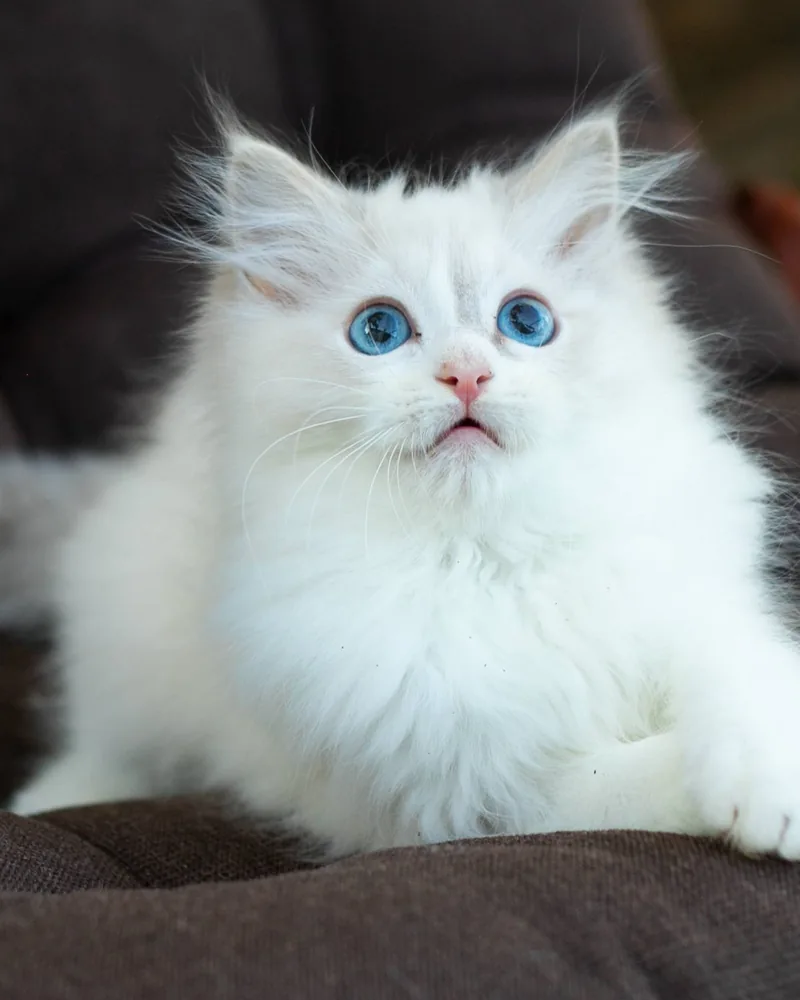
Extra fluffy and happy to be carried around the house.
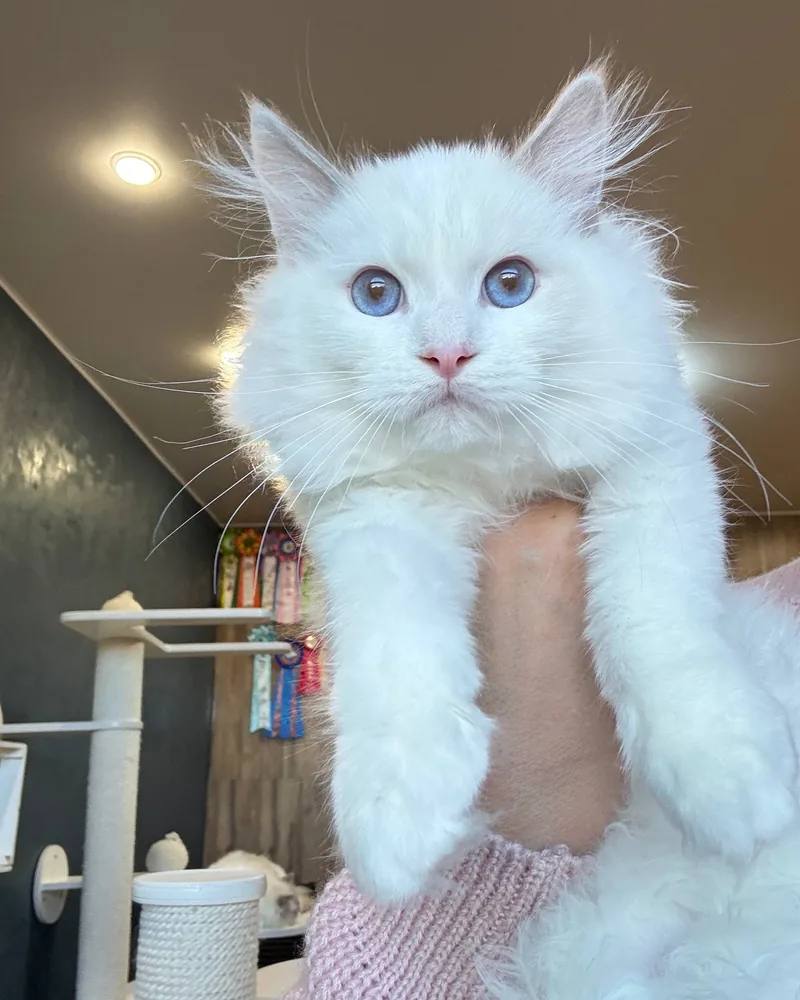
Long-legged, chatty and the first to the door.
The colour is the shade of the points. The fastest way to tell colours apart, especially in young kittens, is the nose leather and the paw pads rather than the fur.
| Colour | Points | Nose and paw pads | How common in Australia |
|---|---|---|---|
| Seal | Dark brown, near black on the ears | Dark brown | Most common |
| Blue | Slate grey with a blue tone | Slate grey | Common |
| Chocolate | Warm milk-chocolate brown | Pinkish brown | Uncommon |
| Lilac | Pale pinkish grey | Lavender pink | Least common |
Dark seal brown points on a cream to fawn body. Seal is the dominant colour and the classic Ragdoll, and it is also the dark brown Ragdoll most people mean when they search for a brown Ragdoll cat. Our full guide to the seal point Ragdoll covers how seal kittens colour up and how to tell seal from chocolate.
Slate grey-blue points on a cool white body. Blue is a diluted seal, and it is the colour behind almost every "grey Ragdoll" you see advertised. Read more on our blue point Ragdoll page.
Warm milk-chocolate points on an ivory body, with pinkish brown nose leather. Chocolate is the lighter brown Ragdoll and is uncommon in Australia because both parents must carry it. Read more on our chocolate point Ragdoll page.
The palest Ragdoll: soft pinkish-grey points, a milky white body and lavender pink nose leather. Lilac is a diluted chocolate and the rarest traditional colour here. Read more on our lilac point Ragdoll page.
The pattern decides where the white goes. It is separate from colour, so a seal can be a colourpoint, a mitted or a bicolour, and so can every other colour. Pattern makes no difference to temperament or price.
No white at all. The body is pale and the points are fully coloured, with a mask covering the whole face. The colourpoint is the original Siamese-style pattern and the one meant by "seal point" or "blue point".
A colourpoint with white mittens on the front paws, white boots up the back legs to the hock, a white chin and a white stripe running down the chest and belly. Many mitted Ragdolls also have a white blaze on the nose. Seal mitted and blue mitted are the most common versions, and two of our queens are mitted.
The most white: a white inverted V on the face, a white chest and belly, and four white legs, with coloured ears, outer mask and tail. A bicolour Ragdoll has a pink nose because the nose sits inside the white. Blue bicolour and seal bicolour Ragdolls are both popular, and a young bicolour kitten can look almost entirely white until its points come in.
Outside the four traditional colours, some overseas registries accept red (flame point) and cream Ragdolls, tortie points, which mix red with another colour, and lynx points, which have tabby stripes on the points. They are genuine Ragdolls in those lines, but very few Australian breeders work with them, and Regal Ragdoll Kittens does not. Our article on the flame point Ragdoll explains why most flame points are male and what to check before you buy one.
A lot of searches for Ragdoll colours are for colours the breed does not come in. The short version: a pedigree Ragdoll is always pointed, semi-longhaired and blue-eyed, so a cat that is not is a cross or another breed.
Our four breeding cats cover all four traditional colours between them. Atticus is a seal bicolour who carries blue and chocolate. Clementine is a seal mitted, Isla a blue mitted and Poppy a lilac bicolour. You can see each of them, with their DNA results, on our queens and king page.
Every Regal Ragdoll kitten is $1,500, whatever its colour or pattern, and goes home at twelve to thirteen weeks desexed, microchipped and vaccinated. This season's kittens, in every colour we have, are on our Ragdoll kittens for sale page. If you are holding out for a particular colour, join the waitlist and tell me which one.
For temperament, size, grooming and health, read our Ragdoll cat breed guide.
Among the four traditional colours, lilac is the least common in Australia, followed by chocolate. Both need the chocolate gene from each parent, and lilac also needs the dilute gene from each parent. Red, cream and tortie Ragdolls are rarer still here, because very few Australian lines carry them at all.
Seal. It is the dominant Ragdoll colour, so one seal parent is enough to produce it, and the seal colourpoint is the pattern most people picture when they think of the breed. Blue is the next most common, then chocolate and lilac.
Yes. Every Ragdoll kitten is born white, shows faint colour on the ears within the first couple of weeks, and keeps darkening until two or three years old. The body often picks up some shading with age too. A kitten at go-home is a lighter version of the adult it will become.
Yes, if both parents carry the dilute gene without showing it. Blue is recessive, so a kitten is only blue when it inherits dilute from both parents. Two blue parents, on the other hand, can never have a seal kitten, because neither has a seal gene to pass on.
With many breeders it does, with chocolate, lilac and show-quality markings costing more. At Regal Ragdoll Kittens every kitten is $1,500 whatever its colour or pattern. Our article on how much a Ragdoll kitten costs covers what drives prices and what a fair price should include.
Tell me the colour and pattern you are hoping for and a little about your home, and I will tell you honestly when we are likely to have one.