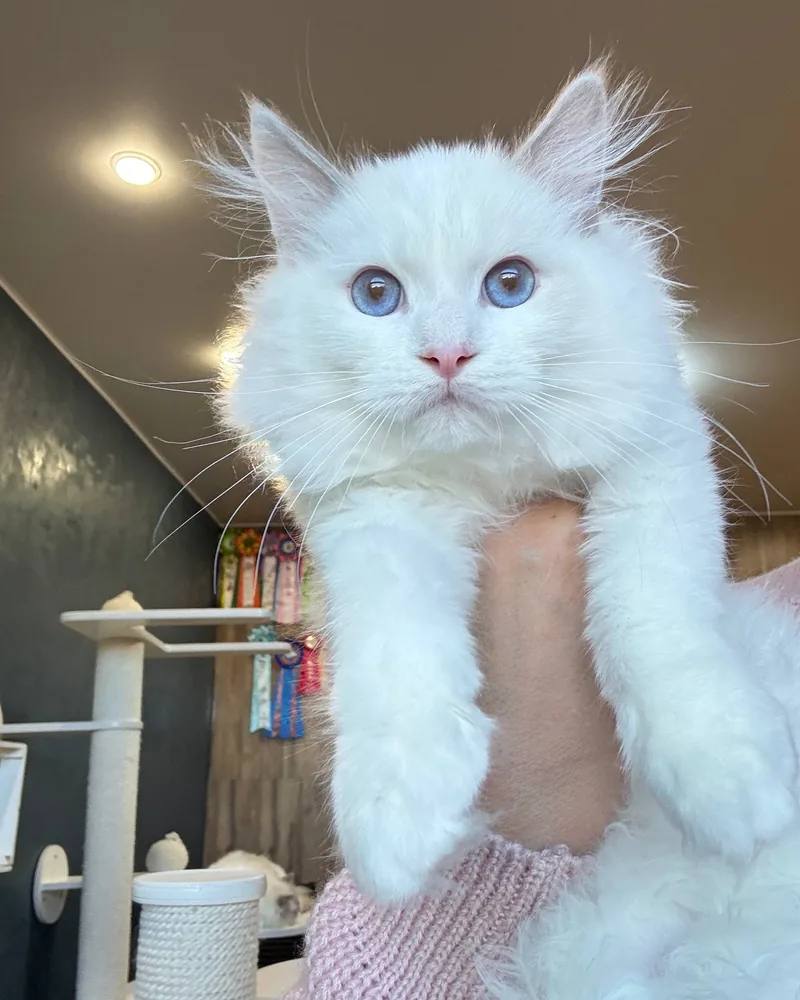
Mabel
Available- Sex
- Female
- Age
- 14 weeks
- Colour
- Lilac bicolour
Long-legged, chatty and the first to the door.
Chocolate Ragdoll
A chocolate point Ragdoll has warm milk-chocolate points on its ears, mask, legs and tail, an ivory body, blue eyes, and pinkish brown nose leather and paw pads. Chocolate colourpoint is the official name for the pattern with no white. It is the lighter, warmer of the two brown Ragdoll colours, and one of the least common Ragdoll colours in Australia.
I'm Shannon from Regal Ragdoll Kittens in Bowral, NSW. Our king Atticus and our queens Isla and Clementine all carry chocolate, so a chocolate kitten turns up in some of our litters, though not every season. Here is how to recognise a chocolate Ragdoll, how it differs from a seal, and how to get on the list for one.
Any chocolate kittens in our house right now are listed below, with their parents and go-home dates. Every Regal Ragdoll kitten is $1,500, chocolate included, and goes home at twelve to thirteen weeks desexed, microchipped and vaccinated. Chocolates are uncommon, so if that is the colour you want, join the waitlist and tell me. Kittens in every colour are on our Ragdoll kittens for sale page.
We have no chocolate kittens listed right now. Join the waitlist and tell me you are after a chocolate Ragdoll, and I will contact you when the next one is born.
These kittens are not chocolate, but they are the closest colours we have this season: lilac is a diluted chocolate and seal is the other brown Ragdoll.
Long-legged, chatty and the first to the door.
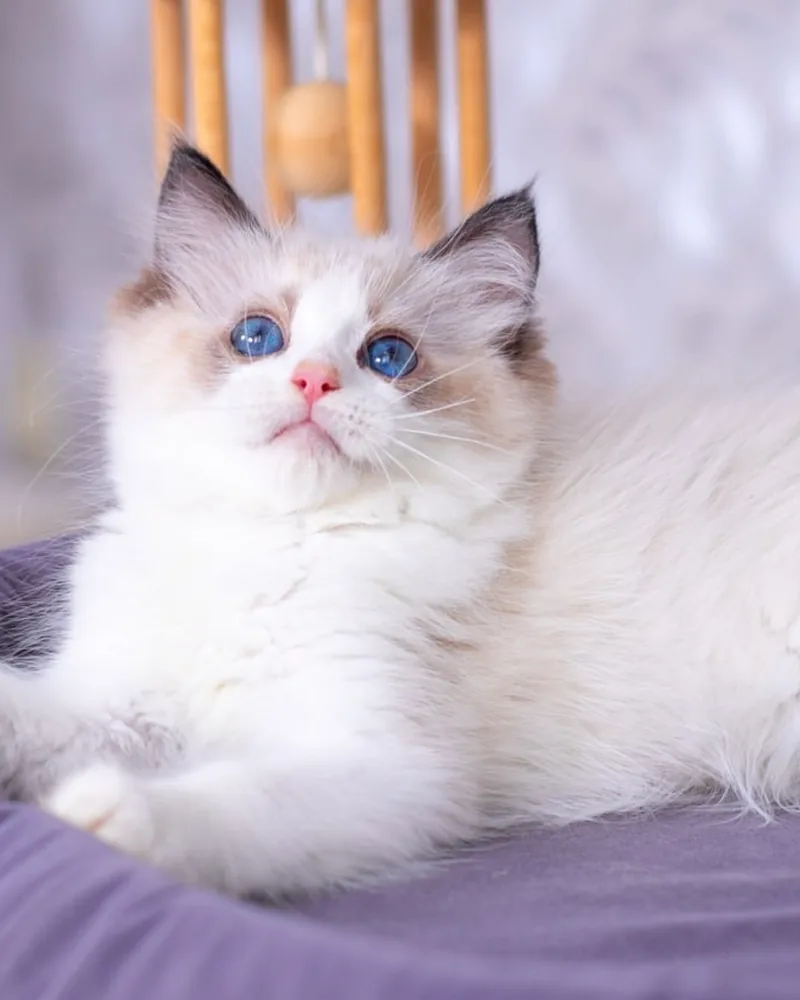
Long, plush and happiest stretched out on the cat bed.
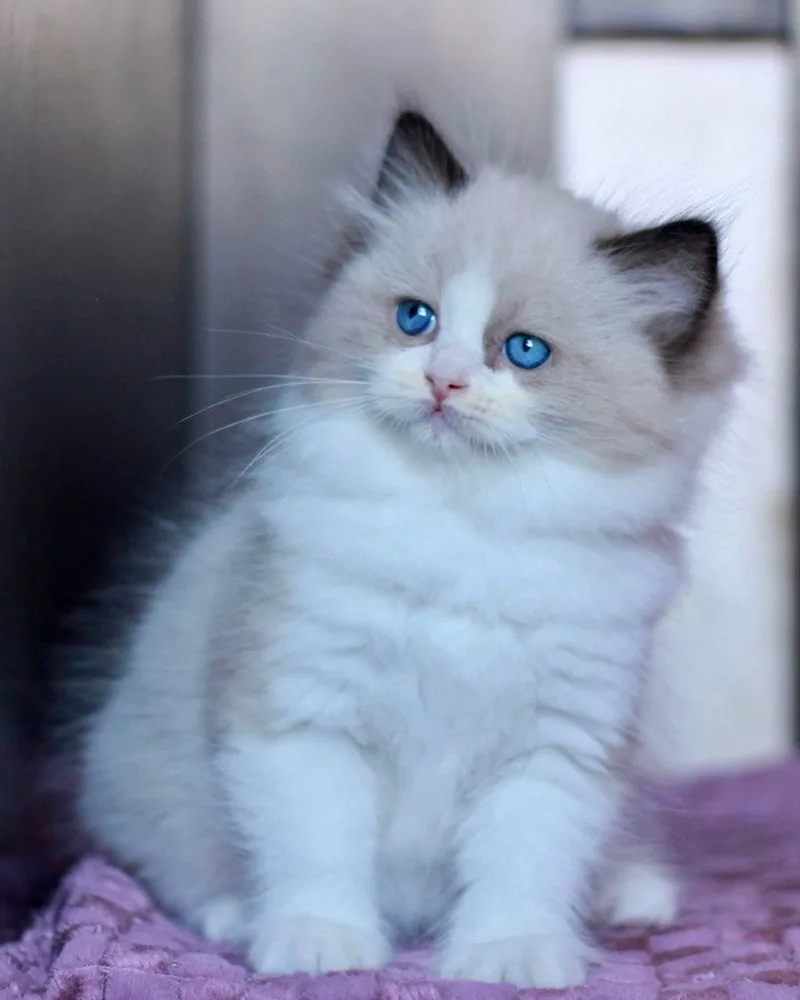
A round, soft boy who purrs as soon as you look at him.
The points on an adult chocolate Ragdoll are an even, warm milk-chocolate brown, the colour of a good hot chocolate rather than dark chocolate. The body is ivory and stays paler than a seal's as the cat ages. Nose leather and paw pads are a pinkish, cinnamon brown, which is the quickest way to tell a chocolate from a seal kitten.
Chocolate kittens are born white and colour up more slowly than seals. At go-home, twelve weeks old, a chocolate kitten often has soft tan ears and a faint mask, and many people mistake it for a pale seal. The difference becomes obvious by six months.
When people search for a brown Ragdoll cat, they usually mean a seal. Chocolate is the other brown, lighter and warmer. Side by side they look like this:
| Chocolate Ragdoll | Seal Ragdoll | |
|---|---|---|
| Points | Warm milk-chocolate brown | Deep seal brown, near black on ears and tail |
| Body | Ivory, stays pale | Cream, darkens to fawn with age |
| Nose leather and paw pads | Pinkish brown | Dark brown |
| How common in Australia | Uncommon | The most common colour |
| Genetics | Recessive: both parents must carry it | Dominant: one seal parent is enough |
More on the darker brown is on our seal point Ragdoll page.
Chocolate comes in all three Ragdoll patterns. The pattern only changes where the white goes.
No white anywhere: milk-chocolate points on an ivory body. This is the cat usually meant by "chocolate point Ragdoll", and the one that shows the colour most clearly.
A chocolate colourpoint with white mittens on the front paws, white boots on the back legs and a white chin and chest, often with a white blaze down the nose.
A white inverted V on the face, a white chest and belly, and four white legs, with chocolate ears, outer mask and tail. The nose sits in the white, so a chocolate bicolour has a pink nose. With so much white and such a soft colour, it is one of the gentlest-looking Ragdolls.
Chocolate is recessive. A cat can carry one copy without showing it, and a kitten is only chocolate when it inherits a copy from both parents. Fewer Australian Ragdoll lines carry chocolate than carry blue, so chocolate kittens are less common here, and some breeders charge more for them.
In our cats, Atticus, Isla and Clementine all carry chocolate. When two carriers are paired, roughly one kitten in four is chocolate or lilac, so we see them in some litters but not every year. You can see each cat's colour and what they carry on our queens and king page. Chocolate is also the colour behind lilac: a lilac Ragdoll is a diluted chocolate, covered on our lilac point Ragdoll page.
In Australia, yes. Chocolate is recessive, so a kitten is only chocolate when it inherits the gene from both parents, and relatively few Australian lines carry it. That makes chocolate point and chocolate colourpoint Ragdolls far less common here than seals and blues, and many breeders have a waitlist for them.
A chocolate Ragdoll has lighter, warmer milk-chocolate points and pinkish brown nose leather and paw pads, on an ivory body that stays pale. A seal has deep brown points that look almost black on the ears and tail, dark brown nose leather, and a body that darkens to fawn with age.
A little. Every Ragdoll kitten is born white, and a chocolate kitten's points show slowly over the first weeks. They deepen until about two or three years old, but a chocolate never becomes as dark as a seal, and its body usually stays paler than a seal's.
Many breeders charge more for chocolate because it is rarer. Regal Ragdoll Kittens does not: every kitten is $1,500, whatever its colour. That includes desexing, microchipping, two F3 vaccinations, a vet check and ACF pedigree papers, with the flight added at cost for interstate families.
Yes, if the other parent carries both chocolate and dilute. Lilac is the dilute form of chocolate, so a chocolate parent always passes on chocolate, and a lilac kitten appears when both parents also pass on dilute. Our lilac point Ragdoll page explains the genetics.
Tell me you are after a chocolate, which pattern you prefer and a little about your home. I will contact you as soon as one is born in one of our litters.