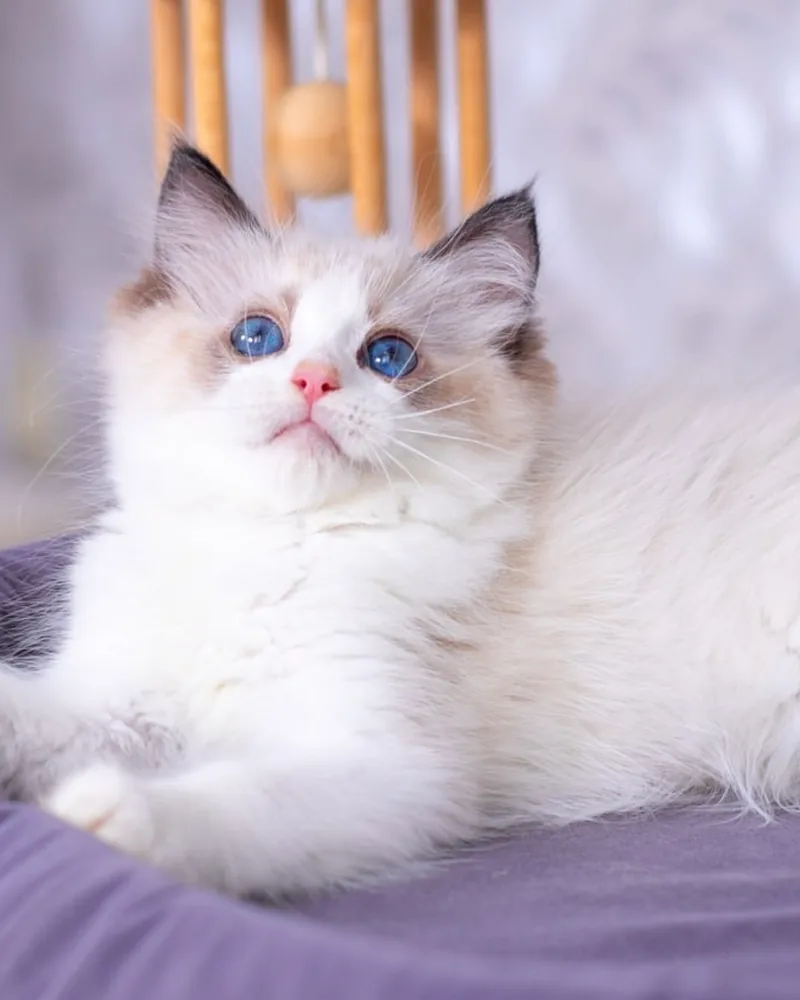
Juniper
Available- Sex
- Female
- Age
- 14 weeks
- Colour
- Seal bicolour
Long, plush and happiest stretched out on the cat bed.
Ragdoll colours
A seal point Ragdoll is a cream or fawn cat with dark seal brown points: the ears, mask, legs and tail. It has blue eyes, a dark brown nose and dark brown paw pads, and no white anywhere. Seal colourpoint is the official name for the same cat. It is the classic Ragdoll look and the most common Ragdoll colour in Australia.
I'm Shannon from Regal Ragdoll Kittens in Bowral, NSW. Seal runs through most of our litters, because our king Atticus is a seal bicolour and our queen Clementine is a seal mitted. This page covers what a seal Ragdoll looks like at every age, how to tell seal from chocolate, and the seal kittens we have now.
These are the seal kittens in our house right now, in every pattern. Each one is $1,500 and goes home at twelve to thirteen weeks, desexed, microchipped and vaccinated, from parents DNA-tested negative for HCM and PKD. Kittens of every colour are on our Ragdoll kittens for sale page, and we fly kittens to every capital city.
Long, plush and happiest stretched out on the cat bed.
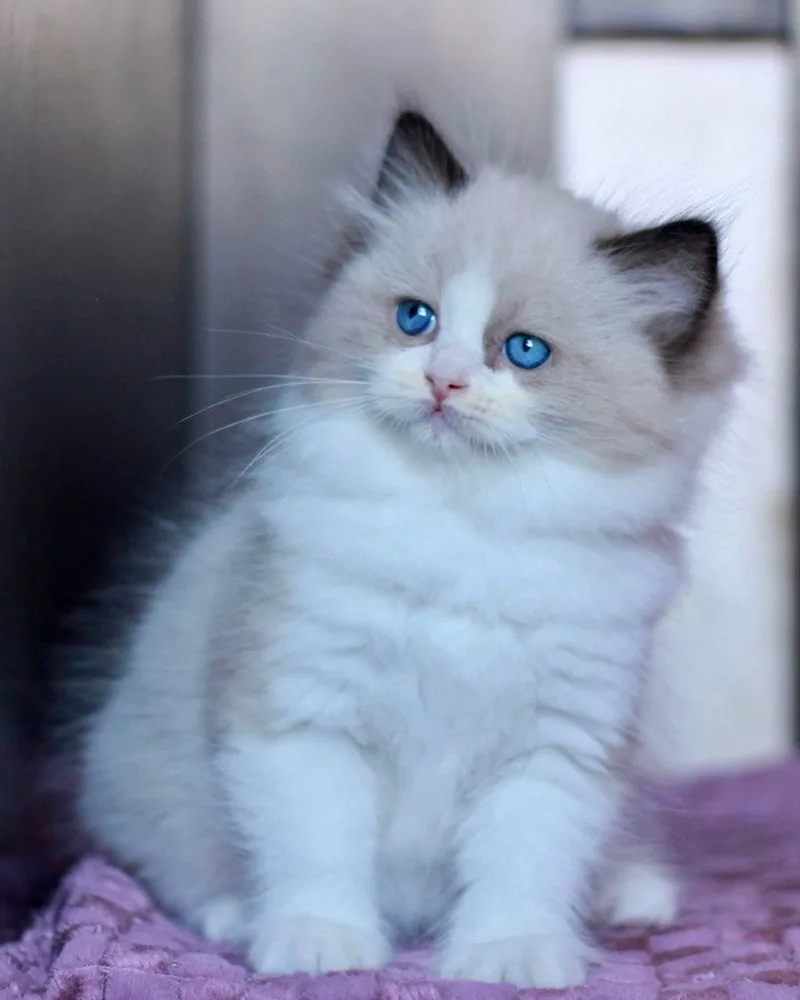
A round, soft boy who purrs as soon as you look at him.
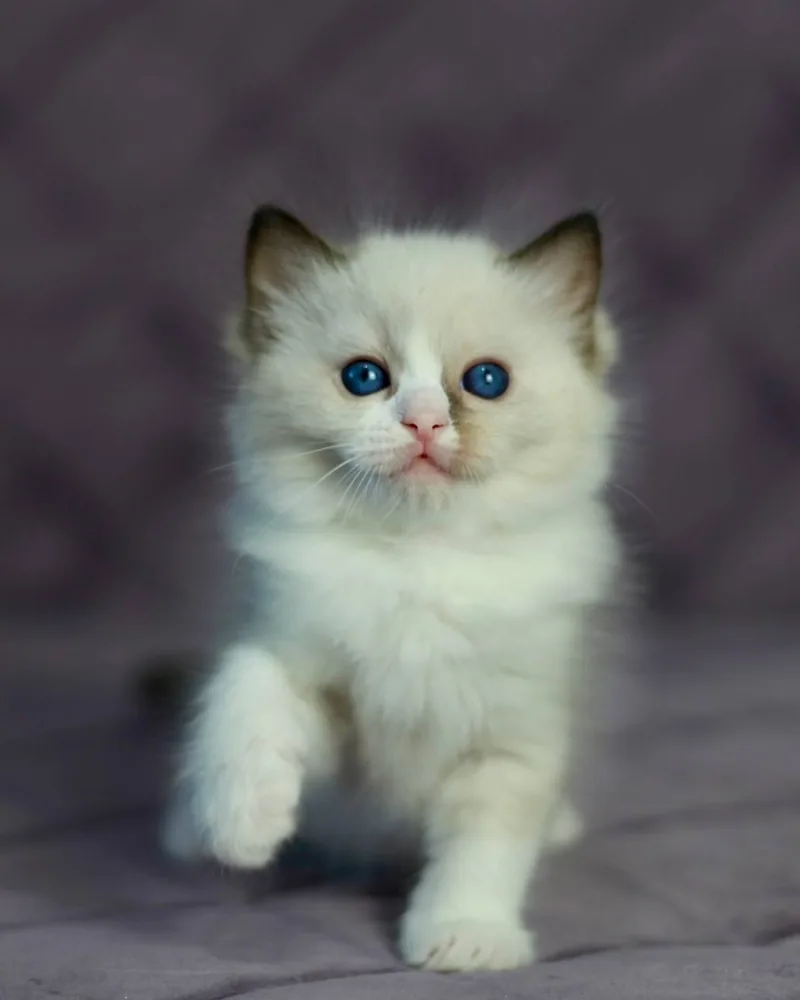
Six weeks old, wobbly on her feet and already marching up to meet visitors.
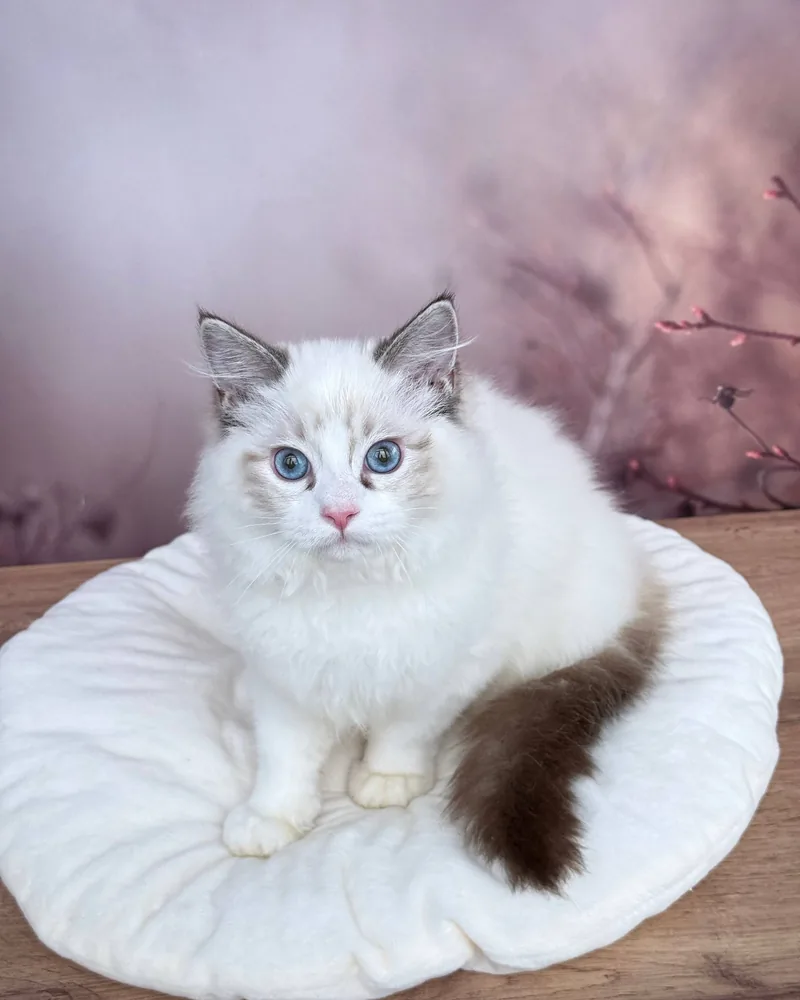
Playful, bold and fascinated by running water.

Calm, cuddly and happiest asleep on someone's shoulder.
The points on an adult seal point are a deep, warm brown that can look almost black on the ears and tail tip. The mask covers the whole face in a seal colourpoint, from the forehead to the chin, and joins up with the ears. The body is lighter: cream to pale fawn on the back, shading to almost white on the chest and belly.
Look at the nose leather and paw pads if you are unsure. On a seal they are dark brown, close to the colour of the points. On a chocolate they are pinkish brown, and on a blue they are slate grey. That one check settles most "what colour is this kitten" questions.
Seal is one of four traditional Ragdoll colours, along with blue, chocolate and lilac. Each can come in three patterns, so "seal point" describes a colour and a pattern together. All twelve combinations are explained on our Ragdoll colours and patterns page.
Every Ragdoll kitten is born white, because the colourpoint gene only lets pigment develop in the cooler parts of the body. A seal point kitten gets grey-brown ear edges in the first week or two, then the tail and nose darken. By the time our kittens go home at twelve to thirteen weeks, the ears and tail are clearly seal and the mask is still filling in around the eyes.
From there the points keep deepening until two or three years old, and the body often picks up some fawn shading on the back. Climate plays a part. The gene is temperature sensitive, so a seal Ragdoll that spends its winters in a cool house, like ours in the Southern Highlands, usually ends up darker than its littermate in Brisbane. That is normal and is not a sign the kitten was mislabelled.
Usually, yes. When people search for a brown Ragdoll cat, the cat they have in mind is almost always a seal: seal is the dark brown Ragdoll colour. The other brown is chocolate, which is lighter, warmer and much less common in Australian lines. Here is how to tell them apart.
| Seal Ragdoll | Chocolate Ragdoll | |
|---|---|---|
| Points | Deep seal brown, near black on ears and tail | Warm milk-chocolate brown |
| Body | Cream to fawn, darkens with age | Ivory, stays pale |
| Nose leather and paw pads | Dark brown | Pinkish brown |
| How common in Australia | The most common colour | Uncommon |
| Genetics | Dominant: one seal parent is enough | Recessive: both parents must carry it |
The seal colour comes in all three Ragdoll patterns. The pattern decides where the white goes, and has nothing to do with temperament.
No white at all. The points are seal brown and the body is cream to fawn. This is the pattern people usually mean by "seal point Ragdoll", and our seal point kittens this season are seal colourpoints.
A seal colourpoint wearing white mittens on the front paws and white boots on the back legs, with a white chin and chest. Many seal mitted Ragdolls also have a narrow white blaze down the nose. Clementine, our quietest queen, is a seal mitted, and you can see her on our queens and king page.
The most white of the three: a white inverted V on the face, a white chest and belly, and four white legs, with seal ears, outer mask and tail. Because the nose sits in the white V, a seal bicolour has a pink nose rather than a dark one. Atticus, our king, is a seal bicolour, which is why so many of this season's kittens are too.
If you want the classic look and the darkest mask, choose a seal colourpoint. If you like a cat with a little white that photographs well against dark furniture, a seal mitted is the middle ground. For a first Ragdoll I often suggest a seal bicolour boy: they grow into big, easygoing cats, and the white face makes their expressions easy to read.
Whichever you choose, the parents matter more than the pattern. Ask to see both on a video call, along with their DNA results, before you put down a deposit. How that works with us is on how to buy a Ragdoll kitten, and if you are leaning toward the grey version of this pattern, read about the blue point Ragdoll.
Yes. A seal point Ragdoll is born almost white, shows brown ear tips within the first two weeks, and keeps darkening until it is two or three years old. The colourpoint gene is temperature sensitive, so cats living somewhere cold, like our Bowral winters, often end up with darker points and a slightly shaded body.
Blue, like every pedigree Ragdoll. Seal points often show the deepest blue of all the colours because the dark mask frames the eye. A cat sold as a seal point Ragdoll with green, gold or aqua eyes is outside the breed standard, whatever its coat looks like.
Yes. Seal is the dominant Ragdoll colour, so it turns up whenever either parent is seal, and the colourpoint pattern needs no white spotting gene. That makes the seal point the Ragdoll you will see most often in Australia, and the one most people picture when they think of the breed.
No. Blue is the dilute form of seal and is recessive, so two blue parents can only have blue or lilac kittens. To get a seal kitten, at least one parent must be seal. Our seal kittens come from Atticus, our seal bicolour king, and Clementine, our seal mitted queen.
From Regal Ragdoll Kittens, $1,500, the same as every other colour and pattern. That includes desexing, microchipping, two F3 vaccinations, a vet check and ACF pedigree papers. Current seal kittens and their go-home dates are listed on this page and on our Ragdoll kittens for sale page.
Tell me which pattern you are after and a little about your home. If none of this season's seal kittens is right, I will let you know when the next one is born.